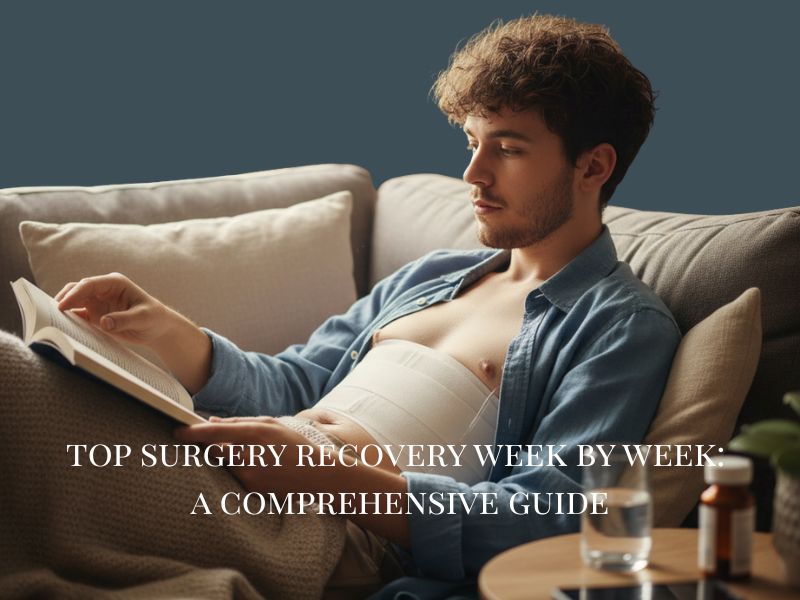
Top surgery recovery begins immediately after the procedure, with careful preparation before your return to the recovery room. The chest is wrapped with dressings and a compression binder to control swelling and protect the area. In some cases, drains may be placed to prevent fluid buildup. The first week after top surgery is typically the most restrictive.
Pain is managed with prescribed medications, rest, and careful positioning. Patients are advised to sleep on their backs and avoid lifting or reaching above shoulder level. Follow postoperative care and the surgeon’s instructions to lower the chance of poor wound healing or blood clots.
The surgery recovery timeline changes gradually. After the initial recovery period, short walks and light movement are encouraged to support blood flow and reduce stiffness. The healing process continues week by week, with mobility and comfort improving as the body adjusts to its new state.
Top Surgery Recovery Timeline

First week
After the surgery is performed, the chest is covered with dressings and a compression binder. Drains are often in place to prevent fluid buildup. Expect swelling, bruising, and discomfort across the upper body. Most daily tasks require help from family or friends. Pain medication is usually prescribed, and patients are told to sleep on their backs and avoid reaching above shoulder level. Careful wound care is critical at this stage.
Weeks two to three
Swelling starts to ease, but the chest can still feel tight. Short walks or light physical activity can help improve circulation and promote healing. The binder remains in place to reduce swelling and protect the surgical site. Patients must avoid strenuous activities, heavy lifting, and stretching their arms too far.
Weeks four to six
The recovery period becomes less restrictive at this point. Many patients return to work if it doesn’t involve physical activities. Mobility improves, but weight-bearing exercises and strenuous activities are still off-limits until cleared by a doctor during regular follow-up appointments.
Beyond six weeks
Most patients can gradually increase activity and return to normal activities. Top surgery scars begin to mature, and early scar care may be recommended. Some soreness lingers, but the healing process continues month by month.
How Long is Top Surgery Recovery Time?
Recovery after top surgery typically takes several weeks, although the pace varies from individual to individual and the type of top surgery. The first days are the hardest. The chest feels tight, the upper body is sore, and drains may still be in place. This early recovery period is when patients need the most rest and help at home.
By the first few weeks, swelling starts to settle. Patients may take short walks but must avoid activities that put strain on the surgical site, such as stretching or heavy lifting. Pain medications are used as needed.
Most patients return to work or school around week four if the job doesn’t involve strenuous exercise or lifting. Full activity often waits until six weeks or later. Scars continue to change for several months as the healing process progresses.
Lifestyle matters here as well. Eating a balanced diet, drinking water to stay hydrated, and avoiding excessive smoking, caffeine consumption, and alcohol all make a difference in how the body heals. If you have a physically demanding job, you may not feel recovered for a longer period of time since you’ll be out of work for longer.
What Factors into Top Surgery Recovery Time
Several factors influence the duration of recovery from top surgery. The surgical method matters. Patients who have a double incision usually need more time before swelling and soreness improve. Smaller incisions often mean a shorter recovery period.
Home setup is another factor. A good recovery space makes the week after surgery easier. Having help from a support system for meals, cleaning, or childcare takes the strain off your chest. Patients who can step back from alternative responsibilities usually do better.
Activity is also key. Wide arm movements, heavy lifting, and strenuous exercise put stress on the chest. These activity restrictions are temporary but important. Top surgeons look for signs of progress at follow-ups to monitor healing before clearing patients for more physical activities.
Top Surgery Recovery Expectations
After top surgery, the chest will be swollen and sore. A binder or compression garment is worn, and patients are instructed to sleep on their backs. Ice packs may be used in the first days to manage pain and help reduce swelling.
Movement is limited. Lifting, stretching, and strenuous exercise are off limits. Light walking is usually allowed, but avoid activities that pull on the upper chest or put weight on the arms. Loose, loose-fitting clothing is recommended for comfort.
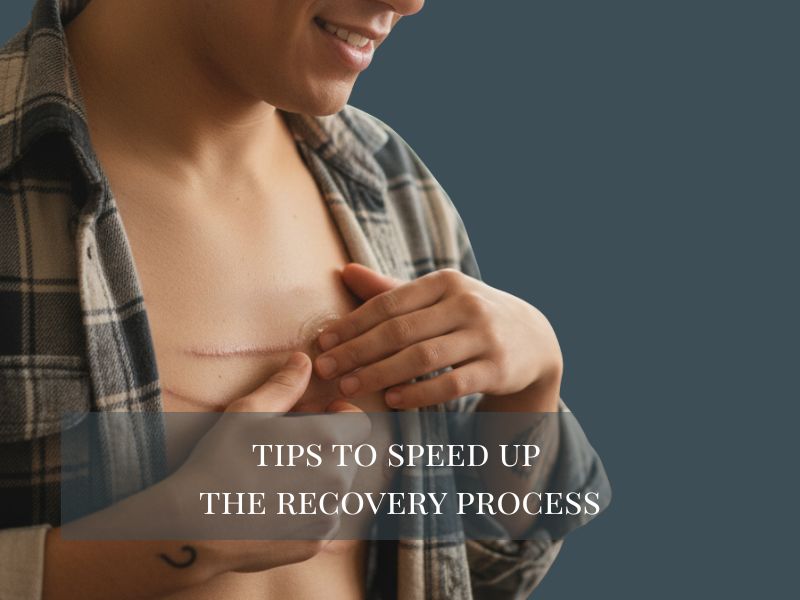
Scars change slowly as the healing progresses. Good wound care, close post op care, and following specific instructions give the best chance for a smooth recovery and the best top surgery results.
How Difficult is Recovery from Top Surgery?
The days right after surgery are the hardest. The chest is swollen, and drains may be in place; most patients feel sore.
Post op instructions are strict, but following them is the best possible path to a fast recovery. Wear the binder, sleep on your back, and avoid putting pressure on the chest. No lifting! No strenuous exercise until the surgeon says otherwise.
Smoking or drinking slows healing down in general. Recovery is almost always smoother when patients follow care instructions and take short walks to promote circulation.
Tips to Speed up the Recovery Process
Simple steps make a difference in top surgery recovery. One of the most important top surgery recovery tips is to follow all specific instructions from your surgeon. Keep the binder on as directed and avoid pulling, lifting, or anything that could put pressure on the chest.
Managing pain correctly helps the recovery process. Take pain medications only as prescribed. Use ice packs in the early days if approved.
Lifestyle choices can significantly impact the progression of the healing process. Stay hydrated, eat a balanced diet, and avoid habits that slow recovery, such as smoking or excessive alcohol consumption. Rest when you need it, but include short walks or light movement to support circulation.
Post op care is ongoing. Keep up with wound care, wear loose-fitting clothing for comfort, and attend every follow-up so your surgeon can monitor healing. These steps help reduce complications and keep the recovery timeline on track.
Post Op Care: How to Promote Healing After the First Week
Once the first week has passed, post op care shifts toward steady healing. Patients may begin short walks each day to support circulation, but must still avoid strenuous exercise or lifting.
Again, lifestyle choices are important. Healing is delayed when patients drink alcohol or smoke, so both should be avoided, and stopping prior to your surgery is even better. Following the surgeon’s plan keeps the recovery timeline moving forward after top surgery.
Surgery Recovery Tips and Returning to Normal Activities
At first, rest matters most for a speedy recovery. Patients are cleared for short walks after a short while, but lifting or strenuous exercise is off limits for a considerable period of time. Wait for the surgeon’s approval before resuming normal activities or adding more movement.
Top Surgery Recovery Week by Week FAQs
How Old Do You Have to Be to Get Top Surgery?
Most plastic surgeons require patients to be at least 16 years old for top surgery, though many won’t perform the procedure until age 18. The minimum age for top surgery varies depending on state laws, surgeon policies, and individual circumstances. Patients under 18 require parental or legal guardian consent, along with letters of recommendation from mental health professionals who are familiar with gender dysphoria.
Are Nipple Grafts Part of Top Surgery?
Yes, in many double incision procedures. During double incision mastectomy, the nipples are removed, resized, and grafted back onto the chest as free nipple grafts. Other techniques may not require grafts. Alternative procedures such as keyhole, inverted-T, or nipple-sparing methods preserve the nipple’s original attachment, avoiding the need for grafting.
What Do I Need to Know About Top Surgery Recovery?
Expect swelling, soreness, and limits on movement. The chest is wrapped with dressings and a compression binder to control swelling, worn for several weeks. Follow post op care, take pain medications as directed, and attend all follow-ups. Temporary drains may be placed to prevent fluid buildup and are usually removed within the first week.
When Will I Really See the Final Results After Top Surgery?
Scars and chest contour changes typically take several months to settle. Most surgeons evaluate patients at the six-month mark for any revision procedures. The healing process continues long after the first recovery period. Swelling diminishes over several months, and scars fade for up to a year or longer after surgery.
Ready for Your Top Surgery Consultation?
Take the next step in your top surgery recovery journey with expert care. Schedule a consultation with Dr. CV Chegireddy at Aesthera Plastic Surgery to discuss your goals, options, and recovery plan.