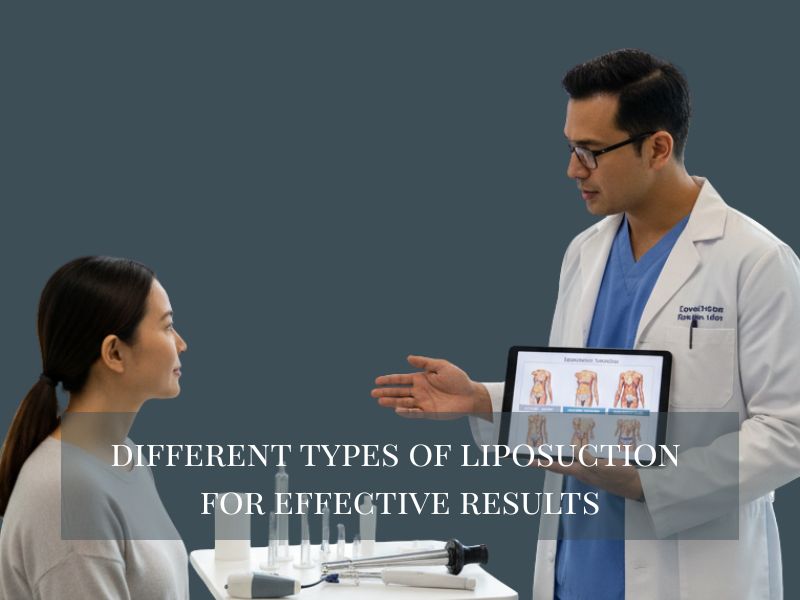
You’ve likely noticed that some areas hold on to stubborn fat, and no matter how much effort you put into eating well or staying active, it just never seems to shed. In these cases, liposuction is an excellent option. Liposuction is a surgical procedure designed to remove fat cells from specific areas of the body. The results are a more refined body contour and balance.
Different methods work in different ways. Laser-assisted liposuction uses heat, while Power-assisted liposuction uses motion. Traditional liposuction relies on steady suction. Each liposuction technique has its place, depending on the treatment area and the person’s goals.
Choosing the right method starts with the right cosmetic surgeon.
What are the Different Types of Liposuction Procedures Ideal for

Tumescent liposuction is a widely used technique. The surgeon injects tumescent fluid, which is a mix of lidocaine, saline, and epinephrine, into the fat. This firms the tissue, limits bleeding, and makes removal smoother. It works well across most body areas in patients with steady weight.
Traditional liposuction uses a thin cannula and manual suction. It’s suited for removing larger volumes of fat, often in the abdomen, flanks, or thighs. Surgeons may pair it with other procedures during the reshaping process.
Power-assisted liposuction uses a vibrating tip to break up fat cells. It’s helpful in tough, dense areas like the upper back or chest, especially after previous surgery. The motion makes the work faster and easier to control.
Laser liposuction uses laser energy to heat and soften fat before suction. This technique may also support skin tightening, particularly in smaller body areas such as the neck, jawline, or upper arms. The laser stimulates collagen production, which may improve results in patients with mild loose skin.
Ultrasound-assisted liposuction delivers ultrasonic energy through a probe to break up fat. It’s often selected for tougher zones, such as the back or flanks, or when scarring is present. This method is also used in some revision liposuction cases.
Water-assisted liposuction uses a pressurized stream to gently dislodge fat and remove it at the same time. It’s less common but helpful when preserving fat for transfer or minimizing trauma to the surrounding tissue.
How a Cosmetic Surgeon Chooses the Right Liposuction Technique
The technique depends on fat type, location, skin condition, and surgical history. No single method works for every patient.
In larger areas, such as the abdomen or thighs, tumescent liposuction or power-assisted liposuction offers greater coverage and efficiency. If a patient has fibrous fat, past procedures, or scar tissue, vibration or ultrasound-assisted methods may be more effective.
If the patient needs subtle shaping in areas like the jawline or neck, laser liposuction may help soften fat and support skin tightening. But it’s not used for deep or large-volume cases.
Some patients benefit from combining methods. For example, tumescent fluid is almost always used, even when laser, ultrasound, or power-assisted tools are added.
The surgeon also considers anesthesia. Smaller areas may be done under local anaesthetic, while larger sessions need general anesthesia.
What to Discuss with Your Board-Certified Plastic Surgeon?

Start with your goals, and be specific during your consultation. Are you seeking body contouring, smoothing a specific area, correcting uneven fat, or combining procedures like a tummy tuck?
Go over your medical history as well. Include any past cosmetic surgery, weight changes, medications, and details about how your skin heals. This affects the choice between local anesthesia and general anesthesia, as well as your risk for complications such as fat embolism.
Ask which types of liposuction fit your case. Tumescent liposuction is effective for soft fat and smoother areas. Power-assisted liposuction is better for scarred or dense areas.
Discuss potential skin quality issues with your surgeon. If your skin won’t contract after fat removal, your surgeon may warn about sagging skin or suggest additional plastic surgery procedures.
Talk through recovery with the surgeon. Ask when you can return to normal activity, what compression is required, and if multiple treatments are expected. This will allow you to plan for a liposuction recovery period to give your body the time it needs.
No matter what you want to know, be sure to bring clear questions. The right cosmetic surgeon will tell you what’s realistic and what’s not.
Types of Liposuction FAQs
What should I know about liposuction costs before planning my procedure?
Liposuction costs typically range from $2,000 to $10,000, depending on several key factors that affect the final price. The total expense includes surgeon’s fees (which vary based on board certification, experience, and specialized skills), anesthesia costs (general anesthesia costs more than local), facility fees (hospital versus outpatient surgery center), and the specific body areas being treated.
What’s the main difference between HD liposuction vs liposuction?
The primary difference between HD liposuction vs liposuction lies in the goal and technique used to achieve results. Traditional liposuction focuses on general fat removal across larger areas to create a smoother, slimmer silhouette, using manual cannula movements to break up and suction out fat cells. High-definition liposuction, on the other hand, goes beyond simple fat reduction by employing ultrasound-assisted technology (typically VASER) to precisely sculpt and define underlying muscle structure, creating an athletic, chiseled appearance.
How Many Types of Liposuction are There?
There are several types of liposuction, including tumescent liposuction, power-assisted liposuction, laser liposuction, and ultrasonic liposuction. Each method targets fat removal differently, using techniques such as fluid injection, vibration, heat, or sound waves. A surgeon may use one or combine several to match the treatment goals.
Which Types of Liposuction Surgery are Right for Me?
The right approach depends on your treatment area, skin tone, fat density, and any previous liposuction work. For example, tumescent liposuction is well-suited for soft fat in larger areas, while power-assisted or ultrasound-assisted methods may be more effective for dense or fibrous tissue. Your surgeon will select the procedure based on your goals and body shape.
Is the Liposuction Cost Reduced by Insurance?
Liposuction is considered a cosmetic procedure and is not covered by insurance. Most plans exclude it because it’s not medically necessary. Exceptions are rare and typically apply only in reconstructive or medically required cases.
Is Liposuction Ever Not a Cosmetic Surgery?
In rare cases, liposuction is part of a surgical cosmetic procedure that serves a reconstructive or functional purpose, such as fat grafting for injury repair or breast reconstruction. Even then, insurance approval is case-specific. Most patients receive liposuction purely for body contouring.
Will Liposuction Help with Body Contouring?
Yes. Liposuction removes targeted fat to improve body shape and proportions, especially in areas resistant to diet and exercise. It’s not designed for weight loss, and it won’t address excess skin or tone on its own.
Is Laser Liposuction Better?
Laser liposuction is particularly effective in small, localized areas, such as the neck, chin, or upper arms, where mild skin tightening is also desired. The laser energy softens fat and may stimulate collagen production, resulting in smoother results. It’s not always better; it depends on the area treated and the patient’s skin elasticity.
Ready for Your Liposuction Consultation?
Schedule a consultation with Dr. CV Chegireddy at Aesthera Plastic Surgery to discuss your options for fat removal and body contouring.
Dr. Chegireddy offers many forms of liposuction, utilizing the method best suited to your goals, skin type, and treatment area. Most procedures are done through small incisions under local or general anesthesia.
Get expert care from a trusted specialist.
References
- https://www.americanboardcosmeticsurgery.org/procedure-learning-center/body/liposuction-guide/
- https://www.newbeauty.com/different-types-of-liposuction/
- https://stanfordhealthcare.org/medical-treatments/l/liposuction/types.html
- https://www.mayoclinic.org/tests-procedures/liposuction/about/pac-20384586