Thinking about DIEP flap scars tends to come up pretty early, sometimes before you’ve even decided if breast reconstruction is the right step. It’s not just about how the reconstructed breast will look, it’s also about what happens to your abdomen, how your skin heals, and what kind of scar you might be left with over time. As you start exploring options, like consulting Dr. CV Chegireddy for DIEP flap breast reconstruction, these questions tend to come up.
Yes, diep flap scars are part of the process after diep flap surgery. But that’s only part of it. Where those scars end up, how they heal, and how noticeable they are can vary quite a bit. A lot depends on your body, how you recover, and the way your surgeon approaches the procedure.
What Are DIEP Flap Surgery Scars?
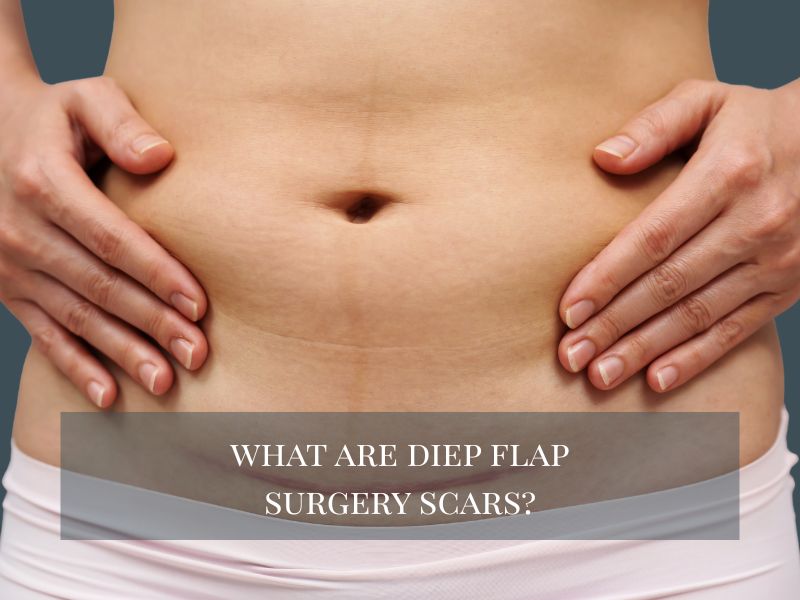
With DIEP flap breast reconstruction, your own tissue is used to rebuild the breast after a mastectomy. More specifically, tissue from the lower abdomen is transferred, along with the deep inferior epigastric perforator vessels that supply it. These abdominal blood vessels are carefully reconnected to restore circulation.
Because this is a type of flap surgery, it naturally involves more than one surgical area. You’ll have incisions at the mastectomy site on the chest, and another at the donor site on the abdomen. That’s why most patients notice multiple scars after diep flap reconstruction surgery.
Compared to implant reconstruction, which uses breast implants, this method relies on your own fat, skin, and blood vessels. It’s a more detailed procedure, and the surgical team spends time reconnecting tiny blood vessels to ensure proper blood flow. That step is critical for tissue repair and keeping the transferred flap healthy.
So yes, scarring is expected, but it reflects the work done during surgery, not a complication by default.
Where Are DIEP Flap Scars Located?
Abdominal Scar
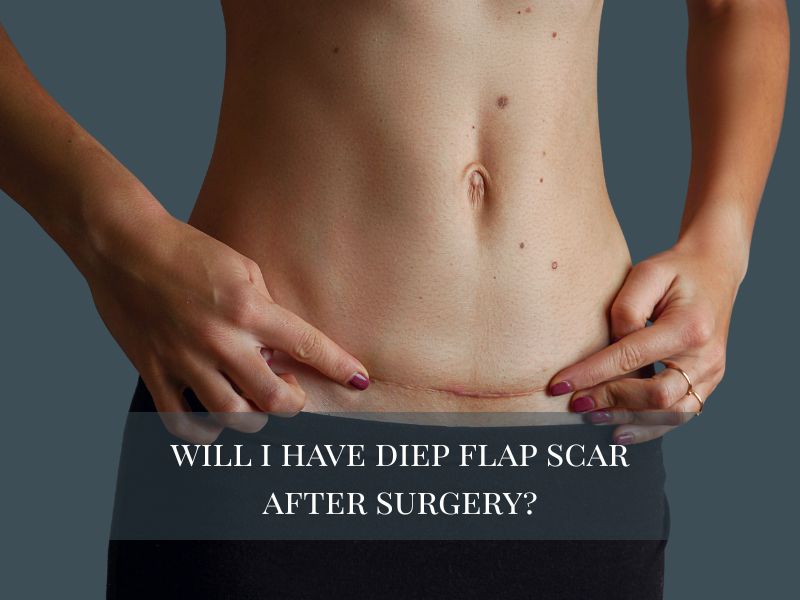
The abdominal scar usually sits low across the abdomen, often along the bikini line, which helps keep it discreet in everyday situations. Patients often compare it to what they’ve seen after a tummy tuck, since the placement and shape are quite similar.
During the diep flap procedure, excess abdominal tissue is removed, and the area is tightened. For some, this even improves the contour of a small muffin top.
Early on, the abdominal incision may look firm or slightly raised, which can feel concerning, but that’s part of normal recovery.
The belly button is repositioned as well, leaving a small circular scar. Over time, this tends to soften and blend in with the surrounding skin, especially with proper scar care.
Breast Reconstruction Scar Placement
On the chest, scar placement depends on your initial mastectomy and whether you had immediate reconstruction or delayed reconstruction surgery.
In some cases, the existing mastectomy site is reused, so no new large incisions are needed. In others, adjustments are required to shape the reconstructed breast, which can add additional scar tissue.
The goal is always to create a balanced, natural-looking breast, even if some scarring remains part of the outcome.
How Surgeons Position Incisions to Be Less Noticeable
An experienced board certified plastic surgeon doesn’t place incisions randomly. There’s planning involved, often based on how clothing sits, how the body moves, and where natural folds already exist.
For many patients, the abdominal scar is positioned low enough to stay hidden under underwear or swimwear.
On the chest, incisions may follow the curve of the breast to make them less noticeable as they heal.
Even so, it’s important to keep expectations grounded. Scars improve, but they don’t completely disappear.
What Determines DIEP Flap Scar Placement?
Scar placement isn’t identical for everyone, and that’s where things get more individualized.
Your anatomy is one of the biggest factors. The amount of available fat, whether there is enough fat in the lower abdomen, and how your abdominal wall is structured all influence how the procedure is performed.
The type of breast cancer surgery also plays a role. A skin-sparing mastectomy can allow for more controlled scar placement compared to more extensive approaches.
Then there’s technique. The way the medical team handles the abdominal blood vessels, reconnects blood vessels, and manages the incision affects both healing and long-term scar appearance.
Healing itself varies. Some patients form thicker scar tissue, others heal with finer lines. Circulation, overall health, and how closely you follow post operative instructions all contribute.
Small contour issues can show up too. For example, dog ears, which are small folds of excess skin at the edges of an incision, may develop and sometimes need minor correction.
What Do Healed DIEP Flap Scars Look Like Over Time?
Right after surgery, scars tend to look more noticeable. They’re often darker, slightly raised, and firm to the touch. That stage can last several weeks, and it’s part of the normal healing journey.
Over the next few months, things start to shift. The color usually fades gradually, moving from red to pink, then closer to your natural skin tone.
For most patients, this process continues well beyond the first six months.
Healed diep flap scars often flatten and soften. The abdominal scar becomes a thinner line across the abdomen, while scars on the breast blend more naturally with the shape of the chest.
Still, not everyone heals the same way. Some patients may notice that their scars remain more visible, especially if their body tends to form thicker or more reactive scar tissue.
Are Scars After DIEP Flap Surgery Permanent?
Yes, any scar created during diep flap reconstruction is permanent in a technical sense.
But permanence doesn’t mean static. Over time, scars evolve. Many become lighter, softer, and less noticeable. For a lot of women, the focus shifts away from the scars and toward the overall look and feel of the reconstructed breast.
In certain cases, additional treatments can help. Laser therapy or minor revision surgery may be recommended if the scar appearance remains a concern.
How Noticeable Are DIEP Flap Scars?
This is often one of the biggest concerns, and the answer isn’t the same for everyone.
For many patients, the abdominal scar is the most visible, mainly because of its length across the lower abdomen. That said, it’s usually hidden under clothing. Scars on the breast tend to be less obvious once the area settles.
Several factors influence visibility. Your skin type, how your body heals, and whether any complications occur during recovery all play a role.
Some potential complications, like infection or tissue death caused by limited blood flow, can affect healing and lead to more noticeable scars.
While rare, conditions such as deep vein thrombosis or pulmonary embolism may also slow the overall healing journey.
For many women, the trade-off still makes sense. Compared to implant reconstruction, using your own tissue often results in a more natural feel.
How to Minimize DIEP Flap Scars After Surgery
There’s no way around having a scar, but there are ways to support better healing.
Following your surgeon’s guidance is one of the most important steps. Keeping tension off the incision, managing activity levels, and giving your body time to heal all matter more than most people expect.
Early scar care can also make a difference. Silicone sheets, gentle massage, and protecting the area from sun exposure are commonly recommended.
Your hospital stay and immediate care matter too. Receiving exceptional care from a skilled medical team helps reduce the risk of complications, which can directly impact how scars form.
Lifestyle choices come into play as well. Good circulation, steady blood flow, and avoiding smoking can all support faster healing.
DIEP Flap Scars vs TRAM Flap Scars: What’s the Difference?
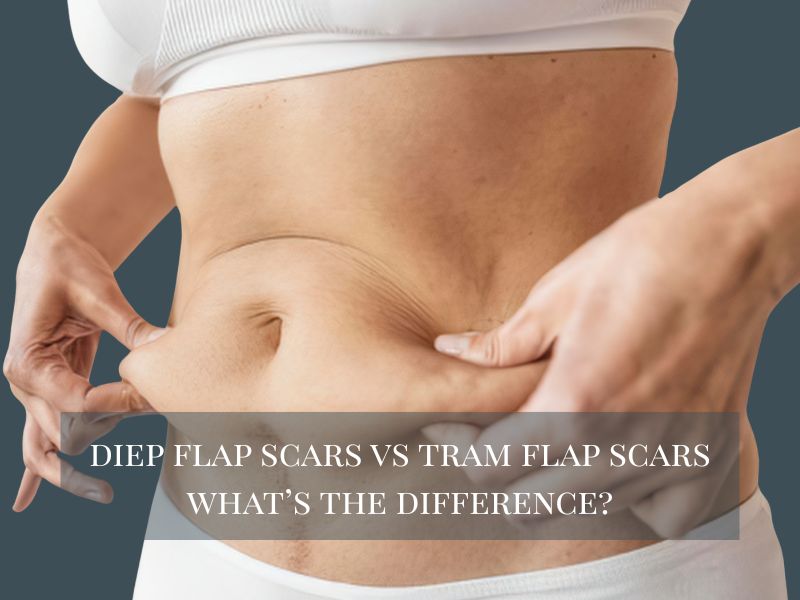
At a glance, the abdominal scar from a diep flap and a TRAM flap can look similar. Both procedures use abdominal tissue, and both leave a horizontal scar across the abdomen.
The difference is more structural. Diep flap surgery preserves the abdominal muscles, while TRAM flap procedures may remove part of the muscle. That can affect strength and recovery of the abdominal wall.
For many patients, this makes diep flap reconstruction surgery a preferred option, even if the visible scars are not dramatically different.
FAQ
What do before and after healed DIEP flap scars look like?
Before diep flap surgery, there’s no abdominal scar, and the chest reflects the changes from the mastectomy. After the procedure, you’ll typically see a horizontal scar along the lower abdomen and scars on the breast. Over time, healed diep flap scars tend to flatten and fade, though the timeline varies. Some patients notice improvement within a few months, while others see gradual changes over a year or more.
How long does it take for DIEP flap scars to fade?
Most scars go through active healing for several months, but they don’t just stop there. Around the 3 to 6 month mark, many patients notice softening and lightening. Full maturation can take a year or longer, depending on how your body responds and how consistent you are with scar care.
Can DIEP flap scars be completely removed?
No, scars from breast reconstruction surgery don’t fully disappear. Treatments can improve how they look, making them less raised or less pigmented, but they remain part of the skin. Many patients find that as the healing journey progresses, the scars become easier to ignore.
Are DIEP flap scars worse than implant reconstruction scars?
They’re not necessarily worse, just different. Implant reconstruction often involves fewer scars, but diep flap reconstruction includes an additional abdominal scar. The benefit is that it uses your own tissue, which often feels more natural in the long run.
What complications can affect DIEP flap scar healing?
Complications like infection, delayed healing, or tissue death can influence how scars develop. Problems related to blood flow, including rare events like deep vein thrombosis or pulmonary embolism, may slow recovery. Close follow-up with your surgical team helps manage these risks early.
What do DIEP flap scars look like at 6 months?
By six months most DIEP flap scars have softened and started to fade from red or pink to a lighter tone. The abdominal scar typically sits low across the bikini line, while breast scars depend on the reconstruction technique used. Although still visible, scars usually appear flatter and less firm than in the early healing stages.
Schedule Your DIEP Flap Breast Reconstruction Consultation
If you’re considering breast reconstruction diep flap, it helps to understand how this approach uses your own tissue to rebuild the breast and what that means for recovery. At Aesthera Plastic Surgery in Atlanta, the focus is on creating a natural result while preserving your abdominal strength, which is a key advantage of the DIEP flap technique.
Schedule your consultation today to learn if DIEP flap breast reconstruction is the right fit for your body and your goals.