Inverted T top surgery is a gender-affirming top surgery option designed for people who need significant skin removal and reshaping to achieve a flatter, more masculine chest. It is often recommended when there is a larger chest, excess skin, or reduced skin elasticity, where other methods may not provide enough control over the final result.
This guide explains how the inverted T technique works, who it is best for, how it compares to other methods, what recovery looks like, and why outcomes vary from patient to patient, as explained by Dr. CV.
What Is Inverted T Top Surgery?
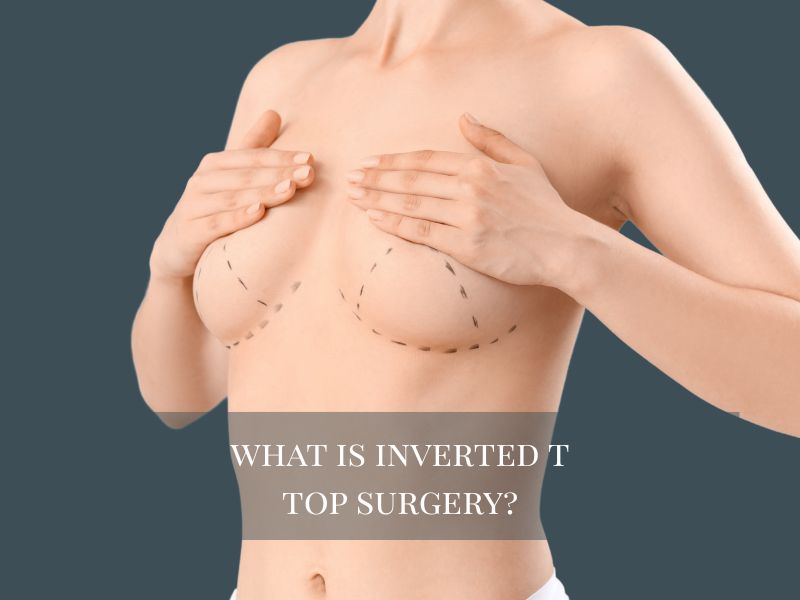
Inverted t top surgery (also called the inverted t approach or t anchor) is a chest masculinization and chest reconstruction technique commonly used in ftm top surgery for patients with moderate to large breasts.
The goal is to remove underlying breast tissue, excess skin, and reshape the chest to create a flat chest with a natural, masculine chest contour. Unlike techniques designed for a small chest or less tissue, the inverted t method gives the surgeon more control over skin tightening, nipple placement, and contouring of the lower chest.
Key characteristics include:
- Breast tissue is removed through planned skin excision
- A combination of horizontal incisions and a vertical incision
- Preservation of the nipple stalk to help maintain blood supply and nerve supply
- Reshaping of the chest wall over the pectoral muscle
How the Inverted T Incision Works
The inverted t incision gets its name from the shape of the scars. It combines:
- Two horizontal incisions along the lower chest
- An extra vertical incision connecting downward, forming an anchor shape (anchor incision)
This layout allows surgeons to remove excess skin from multiple directions. Compared to a small incision, this approach provides more control over chest shape, especially for patients with large breasts or poor skin elasticity.
During the surgery procedure:
- The surgeon removes chest tissue and reshapes the chest over the chest muscles
- The nipple areola complex remains attached to its natural blood supply, rather than becoming nipple grafts
- Areola resizing and precise nipple position adjustments are performed
- In some cases, additional liposuction is used to smooth transitions
Because the nipple areolar complex stays connected, the goal is to keep the areola alive and preserve as much sensation as possible.
Who Is a Good Candidate for Inverted T Top Surgery?
Inverted t top surgery is typically recommended for patients who need more extensive reshaping than a double incision approach or periareolar technique can provide.
You may be a good candidate if:
- You have a larger chest with significant excess skin
- Your skin does not have good skin elasticity
- You want better preservation of nipple sensation
- You prefer avoiding a free nipple graft when possible
- You want a flatter but natural-looking contour, not forced complete flatness
However, eligibility varies. Medical history, body type, skin quality, and prior hormone therapy all influence whether the inverted t top approach is appropriate.
How do I know if top surgery is right for me?
Top surgery is a personal and medical decision. For transgender men and other gender-diverse patients, it is often part of a gender affirming process that aligns the chest with gender identity.
A consultation helps determine:
- Whether top surgery procedure options match your anatomy
- How much skin removal is needed
- What scar pattern best fits your goals
- Whether sensation preservation or scar minimization is the priority
Inverted T Top Surgery vs Other Techniques
Inverted T vs Double Incision
The double incision technique (also called double incision top surgery) uses two horizontal incisions and often involves nipple grafts or a free nipple graft.
Key differences:
- Double incision procedure often sacrifices nipple sensation
- Nipple grafts rely on reattachment rather than natural blood supply
- Inverted t technique preserves the nipple stalk and may allow sensation to be largely retained
- Double incision approach works well for very large chests when sensation is less of a priority
For patients who value nipple sensation and want more natural healing, the inverted t approach can be appealing.
Inverted T vs Keyhole or Periareolar
The keyhole technique and periareolar technique involve minimal scarring and a small incision around the areola.
However:
- These techniques require less tissue and a small chest
- They depend heavily on good skin elasticity
- The periareolar technique involves limited skin excision
For patients with a larger chest, these different types often cannot address excess skin adequately, making the inverted t method a better option.
Top Surgery Techniques
Top surgery is not one-size-fits-all. Surgeons choose between:
- Keyhole technique
- Periareolar technique
- Double incision technique
- Inverted t technique
Each surgery type balances scar placement, contour control, and nipple placement differently. Many patients choose a technique based on their anatomy rather than preference alone.
In some cases, surgeons combine approaches, adjusting the surgery procedure to optimize chest shape and healing.
Benefits of Inverted T Top Surgery
The inverted t top surgery offers several advantages:
- Better contouring for the lower chest
- Improved control over nipple placement
- Higher chance that nipple sensation is largely retained
- Natural transition over the pectoral muscle
- Reduced need for free nipple transfer
For patients with large breasts, it provides a balance between shape and function that other techniques may not offer.
Inverted T Top Surgery Results, Recovery and Aftercare
Recovery varies, but most patients follow a similar recovery process.
Immediately after surgery:
- Procedure is done under general anesthesia
- Drainage tubes may be placed to prevent fluid buildup
- Compression garments support healing
Typical timeline:
- First one to two weeks: swelling, limited movement, rest
- Drains are usually removed within 7–10 days
- Gradual return to normal activity over several weeks
Recovery depends on:
- Amount of skin excision
- Individual healing response
- Adherence to aftercare instructions
Patients with more extensive skin removal may need additional time to heal fully.
Inverted T Top Surgery Scars
Top surgery inverted T Scarring is more visible than with a double incision alone because of the vertical incision.
However:
- Scars usually fade with time
- Proper wound care improves appearance
- Many patients feel the contour benefits outweigh scar concerns
Scar placement is predictable and can often be concealed under clothing.
Cost of Top Surgery
The cost of top surgery varies widely.
Factors include:
- Surgical complexity
- Geographic location
- Facility and anesthesia fees
- Whether revisions or additional liposuction are needed
Inverted T procedures may cost more than simpler techniques due to longer operating time and complexity. Insurance coverage depends on policy and documentation of gender affirming care.
Is Top Surgery Safe?

When performed by qualified surgeons, top surgery is considered safe for most patients. The procedure has a long track record when proper surgical planning and aftercare are followed.
Like any surgery, there are still potential risks. These may include infection, bleeding, temporary or permanent changes in nipple sensation, and delays in the healing process. While these issues are uncommon, they are important to understand before moving forward.
Certain factors can increase surgical risk. Smoking, specific medical conditions, and poor adherence to recovery guidelines can all interfere with healing and increase the chance of complications.
A thorough review of your medical history, along with clear pre- and post-operative instructions, plays a key role in minimizing risks and supporting a smooth recovery.
FAQs: Inverted-T Top Surgery
What makes inverted T top surgery different from other top surgery techniques?
Inverted t top surgery uses an anchor incision that allows removal of more breast tissue and excess skin. This provides better contouring for patients with a larger chest compared to the double incision technique or keyhole technique.
Will I keep nipple sensation with inverted T top surgery?
Because the nipple areola complex stays attached to its natural blood supply and nerve supply, nipple sensation is often largely retained. However, sensation outcomes vary from patient to patient.
Is inverted T top surgery better than a double incision procedure?
It depends. The double incision approach is effective but often requires free nipple grafts, which may reduce sensation. The inverted t approach offers more control over nipple placement while preserving sensation when anatomy allows.
How long does recovery from inverted T top surgery take?
Initial healing usually takes one to two weeks, with full recovery over several weeks. The exact recovery process depends on how much skin excision was required and individual healing factors.
Can inverted T top surgery achieve a completely flat chest?
Many patients achieve a flatter contour, but absolute complete flatness may not be ideal or safe for every body type. Surgeons aim for a natural-looking masculine chest contour rather than over-flattening.
Book Your Top Surgery Consultation Today
Choosing top surgery is a deeply personal decision, and having the right surgical team matters. At Aesthera Plastic Surgery by Dr. CV Chegireddy, patients receive individualized care, clear explanations, and realistic expectations tailored to their body and goals. A consultation allows you to discuss techniques, recovery, and outcomes in detail.
Book your consultation today and take a confident step toward chest masculinization.