Deciding between diep flap reconstruction vs implants usually isn’t something patients figure out overnight. It often comes up after a diagnosis of breast cancer or when planning next steps after a double mastectomy, and suddenly there are multiple breast reconstruction options to process. For more personalized guidance, many patients choose to consult Dr. CV Chegireddy for breast reconstruction early in the decision-making process
Some patients lean toward using their own body tissue for a softer, more natural breast, while others prefer the idea of a simpler surgery with breast implants. Both approaches are valid forms of breast reconstruction surgery, but they come with different trade-offs that aren’t always obvious right away.
Breast Reconstruction Diep Flap vs Implants: What’s the Difference?
At the core, this comparison is really about what forms the reconstructed breast, and how the body adapts to it over time.
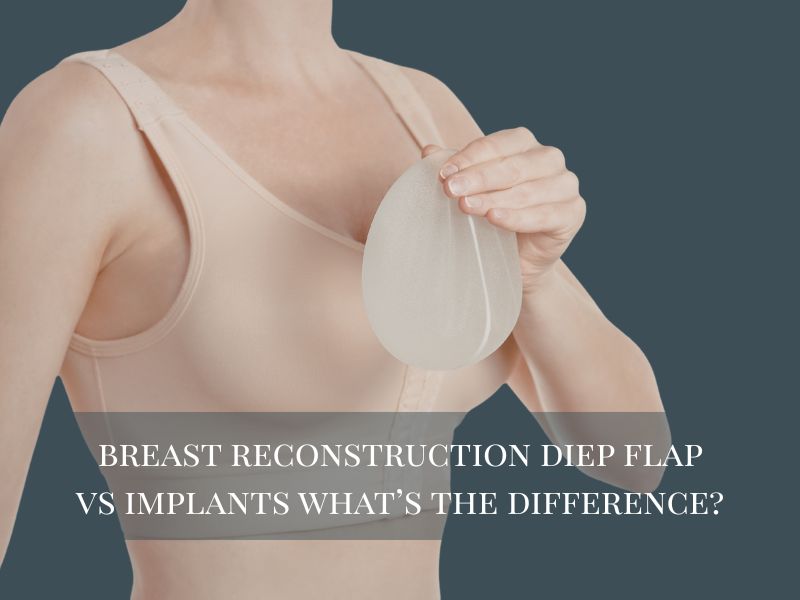
With implant reconstruction, the breast shape is created using silicone implants or saline devices. This type of breast implant surgery sometimes starts with a tissue expander, which gradually prepares the skin before the final implant is placed in a follow-up procedure. It’s a structured process, and many patients are already somewhat familiar with it because of breast augmentation.
On the other side, diep flap breast reconstruction uses abdominal tissue, typically skin and belly fat from the lower abdomen. During the diep flap procedure, surgeons transfer this tissue and reconnect tiny blood vessels to restore blood flow. This is considered autologous tissue reconstruction, meaning everything comes from the patient’s own body rather than an implant.
Compared to older methods like the tram flap, the diep flap avoids taking muscle, which can make a difference in long-term strength. Still, it’s a more complex form of reconstructive surgery, and that complexity shows up in both the operation and recovery.
Candidacy: Who Is a Better Fit for Each Option?
Not every patient approaches breast reconstruction procedures with the same starting point. Body type, medical history, and even how someone feels about surgery all influence what makes sense.
Ideal Candidates for DIEP Flap
Patients considering diep flap reconstruction often want a natural feeling breast that changes with their body. Since it relies on own tissue, having enough abdominal tissue or belly fat is key.
This option is often discussed for patients who have had radiation therapy, since implants can behave less predictably in radiated skin. It can also appeal to those who prefer avoiding foreign material and want to reduce the chance of issues like capsular contracture.
Still, not everyone qualifies. Some patients simply don’t have enough tissue, or they’ve had prior abdominal surgeries that affect the available blood supply.
Ideal Candidates for Breast Implants
Breast implants tend to be a good fit for patients who want a more straightforward surgical path. The procedure is shorter, and recovery tends to be easier at the beginning.
It’s also a practical choice for those who don’t have enough body tissue for flap procedures, or who prefer not to have a second surgical area.
For example, after one breast surgery, implants can help match the opposite side with less overall downtime.
For many women, the idea of a quicker return to a normal life carries a lot of weight, even knowing that implant surgery might require adjustments later.
When Surgeons Recommend One Over the Other
In real consultations, recommendations shift based on details that don’t always show up in general guides. For instance, patients with previous breast cancer treated with radiation are often guided toward flap reconstruction, since it brings its own blood supply.
At the same time, certain health conditions, especially those affecting blood vessels or overall physical health, can make the longer surgery required for diep flap surgery less ideal.
Sometimes it comes down to priorities. A patient who wants fewer initial steps might choose implants, while someone thinking long-term may accept a more involved reconstruction surgery upfront.
Results Comparison: Look, Feel, and Longevity
Natural Look and Feel Differences
A diep flap reconstruction usually results in a softer, more natural breast, mainly because it’s made from living body tissue. The way it settles over time can feel more familiar to patients.
Implants, even advanced silicone implants, can feel firmer. In some cases, especially when there’s limited remaining breast tissue, that difference is easier to notice.
Changes Over Time
This is where patient experiences start to diverge more clearly.
With a diep flap, the reconstructed breast can gain or lose volume with weight changes. Some patients like that consistency with the rest of their body.
Implants stay the same size, which can be helpful for predictability, but over time, issues like capsular contracture, rippling, or shifting can appear. The behavior of textured implants versus smooth implants may also play a role depending on the case.
Longevity and Need for Future Surgeries
Implants don’t last forever. Even without complications, many patients eventually need a second surgery or additional procedures.
A diep flap reconstruction, once healed, tends to be more stable long term. Small refinements, like nipple reconstruction, are sometimes done later, but full replacement is uncommon.
Recovery Time and Healing Process
DIEP Flap Recovery Timeline
Recovery after a diep flap procedure takes more time, and it’s not just about the breast. There’s also healing at the donor site, similar to a tummy tuck.
Most patients spend a few days in the hospital while the surgical team monitors blood flow. The first couple of weeks are usually the most restrictive. By around six to eight weeks, many patients are moving more comfortably, though full tissue recovery continues beyond that.
In some situations, especially where circulation is more delicate, delayed healing can happen, which may extend recovery.
Implant Reconstruction Recovery
Recovery after implant based reconstruction is typically faster at the beginning. Many patients return to light activities within a few weeks.
If a tissue expander is part of the process, the timeline stretches out in a different way. Instead of one longer recovery, it becomes a series of smaller steps leading up to the final implant.
For most patients, the early recovery feels easier, even if the full process includes multiple stages.
Risks and Complications to Consider
Every type of surgical treatment carries some level of risk, and the nature of those risks differs between implant reconstruction and flap reconstruction.
With implants, concerns often include capsular contracture, rupture, infection, and the presence of foreign material in the body. Some patients also notice changes in position or symmetry over time.
With flap surgery, the focus shifts to circulation. Because the procedure depends on reconnecting small blood vessels, there’s a risk of compromised blood flow early on. There can also be issues at the donor site, including additional scars or changes in abdominal strength.
Scarring and Donor Site Considerations
Abdominal Scarring with DIEP Flap
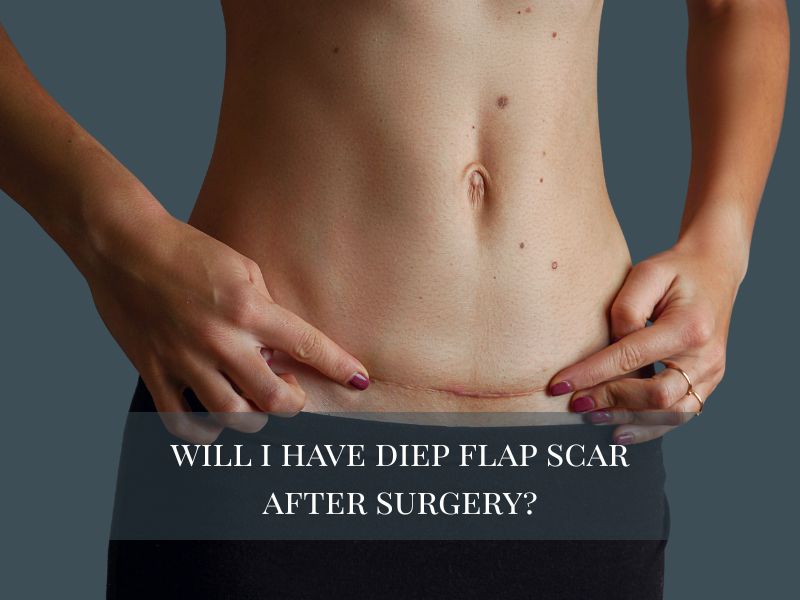
A diep flap breast reconstruction leaves a scar across the lower abdomen, similar in placement to a cosmetic tummy tuck. For some patients, that’s an acceptable trade-off.
It does mean healing in two areas, which can feel like more to manage in the early weeks.
Breast Scarring with Implants
With breast implants, scarring is usually limited to the chest. The extent depends on whether the procedure is immediate reconstruction or delayed.
While there’s no second surgical site, repeated procedures over time can still lead to visible scarring.
Cost Differences and Insurance Coverage
In many cases, breast reconstructive surgery following breast cancer is covered by insurance, including both implant based reconstruction and diep flap reconstruction.
The main cost difference shows up in how the procedures are structured. Diep flap surgery is longer and requires specialized microsurgical expertise, which increases upfront costs.
Implants are usually less expensive initially. Over time, though, the need for maintenance or replacement can change the overall cost picture.
Pros and Cons of DIEP Flap vs Implants
Advantages of DIEP Flap Reconstruction
A diep flap reconstruction uses autologous tissue, creating a natural feeling breast without implants. There’s no risk of rupture or long-term device-related issues.
For patients who want to avoid foreign material and reduce the likelihood of more surgery, this option often feels more definitive.
Advantages of Implant Reconstruction
Implant reconstruction is less invasive at the start, with shorter surgery and quicker early recovery. It doesn’t require a second surgical area and works well for patients without enough abdominal tissue.
For many women, it offers a more predictable and manageable starting point.
How to Choose Between DIEP Flap and Implants
Choosing between diep flap reconstruction vs implants is rarely a simple yes-or-no decision. It usually develops over a few conversations, once imaging, medical history, and expectations are all on the table.
Patients who value a natural breast and long-term stability often consider flap reconstruction. Those looking for a shorter initial process may prefer implant surgery.
In some cases, the decision is clear early on. In others, it shifts after understanding how each option affects recovery, future procedures, and overall lifestyle.
FAQs About Diep Flap Reconstruction vs Implants
How long does a DIEP flap last compared to implants?
A diep flap reconstruction is designed to last long term because it uses living body tissue that integrates with the body. Many patients don’t need further major procedures once healing is complete. Implants, by contrast, are not permanent and often require replacement or revision over time.
Is DIEP flap safer than implant reconstruction?
Safety depends on the situation. Implant reconstruction involves shorter surgery but carries risks like capsular contracture or implant rupture. Flap reconstruction is more complex and depends heavily on stable blood flow, but it avoids long-term implant-related issues.
Can you switch from implants to DIEP flap later?
Yes, it’s possible to move from implant based reconstruction to a diep flap procedure later. This is often considered if implants cause complications or don’t meet expectations. The transition usually involves removing the implant and performing a full flap surgery.
Will the reconstructed breast feel normal?
A natural feeling breast is more commonly associated with diep flap breast reconstruction, since it uses the patient’s own fat and skin. Implants can feel firmer, though many patients adapt to that sensation over time.
How long is the full recovery for each option?
Recovery timelines vary. Diep flap surgery often requires about six to eight weeks for initial healing, with gradual improvement after that. Implant surgery has a shorter early recovery, but if a tissue expander is used, the overall process can take several months.
Do both options include nipple reconstruction?
Yes, both approaches can include nipple reconstruction as a later step. This is usually done after the breast shape has settled, and timing depends on healing and patient preference.
Start Planning Your Breast Reconstruction
Thinking about breast reconstruction often comes with a mix of practical and emotional considerations. Some patients are early in the process, while others are revisiting breast reconstruction options after previous procedures. Either way, understanding the different paths available, from implants to autologous techniques like DIEP flap reconstruction, can help you feel more confident moving forward. Having a clear plan tailored to your situation makes the entire process more manageable.
At Aesthera Plastic Surgery, you can book your consultation today in Atlanta to review your options in detail. Whether you’re exploring reconstruction after surgery or considering a revision, this is where you can get specific answers and a realistic plan that fits your lifestyle.
References
- https://www.plasticsurgery.org/reconstructive-procedures/breast-reconstruction
- https://www.mayoclinic.org/tests-procedures/breast-reconstruction-flap/about/pac-20384937
- https://www.hopkinsmedicine.org/health/treatment-tests-and-therapies/breast-reconstruction
- https://www.mayoclinic.org/tests-procedures/breast-reconstruction-implants/about/pac-20384934