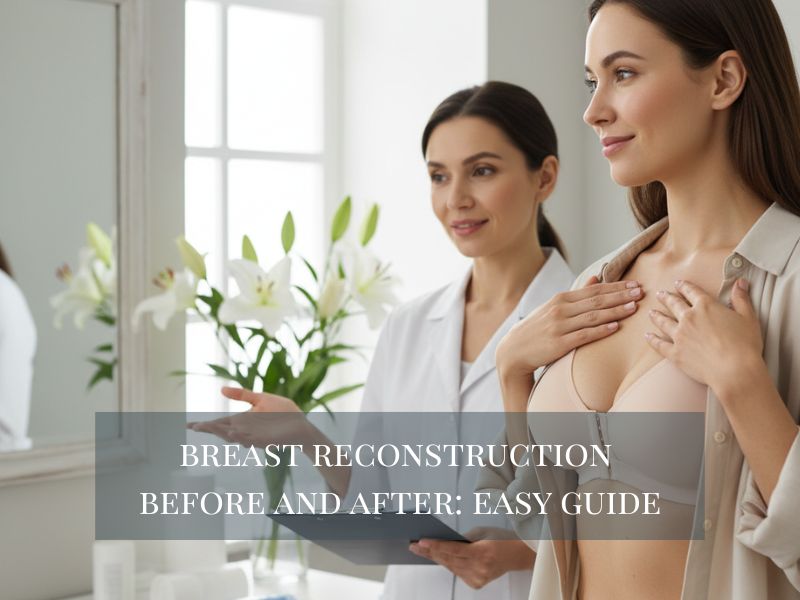
Breast Reconstruction before and after help patients envision the possibilities and set realistic expectations. When facing a mastectomy, many women consider breast reconstruction to restore shape, symmetry, and confidence.
What is Breast Reconstruction Surgery?
Breast reconstruction is a surgical procedure to rebuild the shape and appearance of a breast following a mastectomy, lumpectomy, or due to congenital deformities. It helps restore symmetry, improve body confidence, and create a natural-looking contour. Depending on each patient’s needs, reconstruction can be done using implants, natural tissue, or a combination of both, often as part of a personalized treatment plan designed by your plastic surgeon.
Types of Breast Reconstruction Techniques
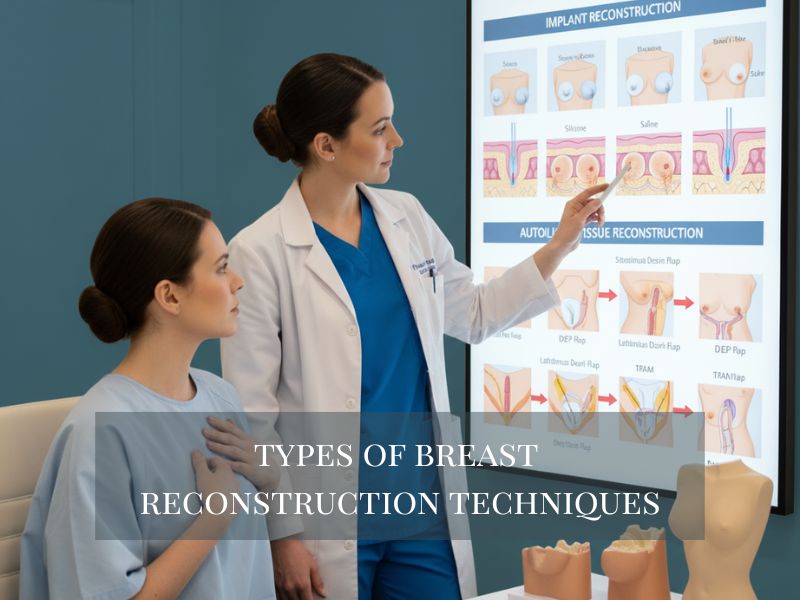
When it comes to breast reconstruction, there is no one-size-fits-all method. Surgeons choose techniques based on patient anatomy, cancer treatment plans, lifestyle, and aesthetic goals. Below are key breast reconstruction options commonly performed in plastic surgery:
Autologous (Flap-based) Reconstruction
This method uses your own tissue, usually skin and fat from the abdomen, thigh, or back, to rebuild the breast. Because it uses your own tissue, results often look and feel natural. Some patients also notice improved abdominal contour after DIEP, though the primary goal is breast reconstruction.
Implant-Based Reconstruction
One of the most common methods after mastectomy, implant-based reconstruction uses silicone or saline implants to restore breast shape and volume. It can be done in one or two stages, sometimes starting with a temporary tissue expander that’s later replaced by a permanent implant. This approach generally involves shorter surgery and recovery time than tissue-based methods.
Partial & Hybrid Options
In some cases, patients benefit from combining techniques for a smoother and more balanced result. Fat grafting (using your own fat) can be added to enhance shape or softness around an implant or flap. Small touch-ups like nipple reconstruction or tattooing can also help refine the final appearance.
Special Consideration: Mastectomy Types & Skin/Nipple Preservation
Modern surgical techniques such as nipple-sparing or skin-sparing mastectomies allow surgeons to keep as much of the natural breast skin, and sometimes even the nipple, as possible. This preservation helps achieve a more realistic and natural-looking outcome in breast reconstruction.
Breast Augmentation Alternatives
In some situations, augmenting or refining the reconstructed breast is needed. These alternatives complement or partially replace full reconstruction:
Fat Grafting
- Uses your own fat harvested from another area (abdomen, thighs)
- Helps smooth contour irregularities after initial reconstruction
- Often used in revision stages or in hybrid reconstructions
Tissue Expanders
- Temporarily placed to stretch the skin
- Gradual inflation over weeks or months
- Final implant swapped in later
Muscle Flaps
- Some reconstructions still use muscle-based flaps (e.g. latissimus dorsi)
- May be combined with implants for volume
Nipple Reconstruction & Tattoo
- Nipple reconstruction is usually staged after healing, many patients add 3D areola tattooing about 3 months after reconstruction once tissues settle.
Right Breast Augmentation (for symmetry)
- In unilateral reconstructions, surgeons may perform augmentation on the natural breast to match the reconstructed side
What to Expect During Surgery
Here’s a breakdown of how surgery is performed and what patients should know:
- Reconstruction is performed under general anesthesia and often requires several hours (sometimes 6–8+ hours for DIEP flaps). –
- For flap procedures, the surgeon harvests tissue (skin, fat, blood vessels) and then connects the vessels under a microscope to establish blood supply.
- Incisions are closed with sutures or staples, drains are placed to collect fluid and are removed later.
- When a tissue expander is used, it is placed first, inflated later, and eventually exchanged for a permanent implant.
- If nipple reconstruction is to be done, it’s often performed in a second stage surgery, using techniques like star-shaped incisions, followed by tattooing later.
- Patients meet with their surgeon beforehand to plan the approach, discuss risks, and ask questions.
Breast Reconstruction Recovery and Aftercare

Breast reconstruction recovery is gradual and patient-focused. Here’s a typical timeline and tips for optimal results:
Early Days (First 1–2 Weeks)
- Patients may spend 2–4 days in hospital (often shorter for implant-based).
- The initial one to two weeks of recovery can involve feeling tired and sore, with light activities typically resumed within two to four weeks.
- Walking and gentle movement are encouraged early to reduce stiffness and improve circulation.
- Pain is controlled via medication; many patients need fewer opioids with modern protocols.
- Drains are monitored and usually removed after 1–3 weeks.
Weeks 3–8
- As swelling subsides, patients gradually resume light activity
- Avoid lifting heavy weights, strenuous exercise, or overhead motion
- Follow-up visits to assess healing, manage scars, and check symmetry
Longer-Term (3–12+ Months)
- Final swelling usually resolves in 6–12 months
- Secondary or “revision” procedures often occur ~3 months after reconstruction (e.g. fat grafting, scar revision, nipple reconstruction).
- Patients often feel stable and return to normal daily activity by 3–6 months
- Some patients undergo nipple reconstruction and/or tattooing in a later stage.
Tips for Optimal Recovery
- Follow all wound care instructions and maintain hygiene
- Wear supportive garments or bras as directed
- Avoid smoking, as it impairs blood flow and healing
- Attend all follow-up appointments
- Healthy habits such as nutrition and hydration are important for recovery post breast reconstruction surgery.
- Be patient, appearance continues to improve over time. Also, building a support system and preparing the home for recovery are essential for women undergoing breast reconstruction.
Conclusion and Next Steps
Breast reconstruction is a deeply personal, transformative process. While “Breast Reconstruction Before and After” photos help set expectations, real results depend on individual anatomy, technique, and healing.
From bilateral nipple sparing mastectomy and bilateral skin sparing mastectomies to bilateral DIEP flaps or implant-based reconstruction, the options are broad, and our plastic surgery team should tailor a plan to your needs. Whether you opt for fat grafting, tissue expanders, or nipple reconstruction, your surgeon will aim for a natural appearance, symmetry, and long-lasting results.
If you’re considering reconstruction after mastectomy for breast cancer, view before and after photos, ask your surgeon about breast augmentation, and request details on smooth implants, flap options, and procedural steps.
Breast Reconstruction Before and After FAQs
Does Insurance Cover Breast Reconstruction?
Most health insurance plans must cover breast reconstruction after mastectomy under the Women’s Health and Cancer Rights Act of 1998. This federal law requires group health plans and insurers to provide coverage for all stages of reconstruction on the affected breast, surgery on the opposite breast for symmetry, external breast prostheses, and treatment of physical complications.
Standard deductibles and copayments still apply to these procedures. Check with your insurance provider to understand your specific coverage details and out-of-pocket costs.
What factors determine the total cost of breast reconstruction surgery?
The total cost of breast reconstruction varies based on several key factors. The type of procedure plays the largest role, implant-based reconstruction using saline or silicone implants typically costs less upfront than tissue-based methods like DIEP flap or fat transfer, which require longer operating time and advanced surgical expertise.
Additional cost factors include your plastic surgeon’s experience level, the hospital or surgical facility fees, anesthesia charges, and medical testing.
What changes can I expect in breast reconstruction before and after surgery?
You’ll see swelling early on, but over months the shape, symmetry, and contour refine. Before and after photos help set expectations, but final results often take up to a year or more to stabilize. Women often express satisfaction with their breast reconstruction results, noting improvements in symmetry and appearance.
Also, breast reconstruction can provide not only aesthetic improvements but also functional benefits, such as restored sensation in some cases.
Is nipple sparing mastectomy always possible with reconstruction?
Not always, but if the tumor location and blood supply allow, nipple sparing mastectomy is often preferred to preserve natural appearance. It depends on cancer stage, skin involvement, and surgeon’s assessment.
How long does recovery take after flap or implant reconstruction?
Hospital stay is typically 2–4 days. Basic daily activities resume within weeks, but full recovery may take 3–6 months. Flap procedures may require more time, and revisions like fat grafting or nipple reconstruction often come later.
What is a bilateral DIEP flap and why is it used?
A bilateral DIEP flap uses tissue from both sides of your abdomen to reconstruct both breasts. It preserves abdominal muscle, yields a natural-feel breast, and is a highly accepted method of autologous reconstruction.
Can I have right breast augmentation if only one side is reconstructed?
Yes. In unilateral reconstruction, many patients choose augmentation or reshaping of the healthy breast to improve symmetry, matching contour, size, and appearance.
Are implants or flaps better for long-term results?
Both have pros and cons. Implants often mean shorter initial surgery and recovery, but may require replacement. Flaps tend to look and feel more natural and often last longer, though surgery is more complex.
Ready for Your Breast Reconstruction Consultation?
Take the next step toward healing and confidence by scheduling your consultation with Dr. CV Chegireddy. Known for his expertise in breast reconstruction, Dr. Chegireddy offers compassionate, personalized care to help you explore every option. Whether you’re considering implants, flap-based reconstruction, or a combination approach, you’ll receive honest guidance and support throughout your entire journey.
Ready to move forward? Contact our plastic surgery Aesthera Plastic Surgery team to schedule a consultation, review your custom plan, and start your journey with hope and expertise.